Chairman's Letter
Matching Gift Furthers Ministry
Dear Brothers and Sisters,
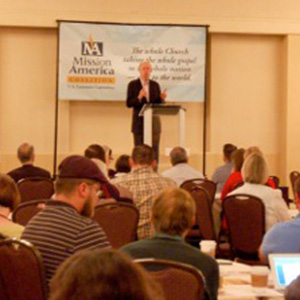
We have just received the promise of a $25,000 matching gift. This is a great blessing and is coming at a time of significant need!
One subject that we don?t usually address in the Evangelism Connection is the matter of funding for the Mission America Coalition and LOVE2020. You receive the Evangelism Connection monthly without charge or obligation. We love to serve you in this way and in any way that we can.
At the same time, we do need funding. We are funded in three major ways. First, the members of MAC are asked to make at least one donation each year. Secondly, all of us on the MAC Facilitation Team must raise our own support. Thirdly, we receive gifts from the larger MAC Family.
Would you join us in making the most of this matching gift by donating now? It would mean so much. Donate online or you may mail your gift to the Mission America Coalition, P.O. Box 13930, Palm Desert, CA 92255, by July 31.
Thank you for your prayerful consideration. Have a blessed June!

Paul and the MAC Team
Evangelism News
National Summit on the Gospel - Videos on YouTube
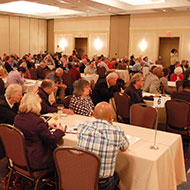
About 200 passionate, gospel-driven leaders and lay people came together in Houston in April for MAC's National Summit on the Gospel. The videos of speakers from plenary sessions are now available online.
"We've never had a meeting that has had such great synergy," said MAC Chairman Paul Cedar. "Every part of it came together. Our plenary speakers and workshop leaders provided insights and resources that were amazingly consistent and compatible."
MAC YouTube Channel
More than 400 Commit to Christ at 'Ohio Valley Celebration'
At an event called Ohio Valley Celebration in late April, William Graham addressed the crowd with a message pointing to the hope that can be found in Christ.
"Before you were even born, before you were created, God knew you by name. It's not an accident that you're here tonight. It's a divine appointment," said Graham. "Sometimes we don't understand the broken things in our life, but God sees a greater picture than we ever could. Why carry all the pain you have when Jesus wants to take it and carry it for you? God wants to bring you joy!"
More than 410 came forward at the invitation to begin a relationship with Jesus.
"We've seen hearts and lives changed. We've seen excitement in the air and we've seen people dedicate their lives to Jesus Christ. That's what it's all about," said Theresa Rowe, executive team and communications team leader.
The event included KidzFest, which offered games, cotton candy, a petting zoo and bounce houses and a program of music and drama for children. The Ohio Valley Celebration also featured free concerts from top Christian bands The Afters, Aaron Shust, Dae-Lee, Colt Graves and Kings Highway.
More info
California Church Mobilizes 10,000 Volunteers for 'Weekend of Service'
In April, one church mobilized an estimated 10,000 volunteers to complete over 400 charitable service projects in 48 hours, an estimated more than $2 million in billable labor and material.
Known as the "Weekend of Service," North Coast Church in California benefitted over 100 locations in six cities in North San Diego County.
Larry Osborne, pastor at North Coast Church, said the multi-site church "is built around small groups, which greatly helps us mobilize our congregation." He said, "These small groups do service projects year round, with an average of 10 projects per week, so the concept of actively serving our community is already an important part of our church."
During the event, which is held every other year, the church shuts down Sunday services to serve the community.
Read full story
Pastors Gather for Reconciled Church Summit
More than 100 pastors from throughout the U.S. gathered in Orlando in April to talk about racial reconciliation and issues of injustice in the wake of the Baltimore riots. The summit, called "The Reconciled Church: Healing the Racial Divide," brought together an interracial group of pastors.
The summit was organized by Dallas mega-church pastor T.D. Jakes; Pastor Harry R. Jackson Jr., head of the Hope Community Church in Washington, D.C.; and televangelist James Robison.
The attendees were given practical suggestions on how to improve criminal justice through their congregations.
The purpose of The Reconciled Church, Jakes said, is to bring together congregations that have a common interest in promoting equality and fighting injustice.
In times of disaster and tragedy, it's police and firefighters who are considered the first responders. In times of racism and injustice, Jakes said, it should be the clergy.
Orlando Sentinel website
Aurora Citizens Walk and Pray for National Day of Prayer
On the National Day of Prayer in May, residents in Aurora, Ill., gathered for a prayer walk in their community. The walk featured stops along the way at more than a dozen places including the Countryside Care Center, West Aurora High School, the Paramount Theater and the Fox Valley United Way. Residents were encouraged to either join the all-day walk or participate in neighborhood walks.
Rev. Randy Schoof of the Warehouse Church in Aurora and lead pastor for the ongoing Loving Our Cities to Christ movement in Chicago's Fox Valley, participated in the walk for his twelfth year.
Schoof said, "It's most important that the local churches here be involved. This is an opportunity for Jesus' people to pray together for our city."
Participant Sarah Gonzales of Aurora said, "We're praying for the hospitals, and the schools and the city. We also pray for the young people that their parents will love them and take care of them."
Marlene Ruiz of Aurora said the walk was the first she had attempted and she also was hopeful that positive change would come to Aurora.
"I also want to pray for our community," Ruiz said. "We know that we need a change in the hearts of people, and everybody needs Jesus."
Chicago Tribune website
Chaplains Respond to Baltimore
In response to civil unrest, the Billy Graham Rapid Response Team sent crisis-trained Chaplains to Baltimore to help with the crisis. "In the midst of this civil disorder, we know many lives have been impacted with fear and concern for their own safety," said Jack Munday, international director of the Rapid Response Team. "As with any storm in life, we know that only through Christ can people discover the hope they desperately need. Therefore, we will work with local churches and seek to support those who are grieving after this tragic death, as well as all communities and government officials."
In the past six months, the Rapid Response Team has had a presence in other civil unrest situations surrounding police shootings, including Madison, Wis., in March and in Ferguson, Mo.
Billy Graham RRT website
Austin Disaster Relief Network Responds to Texas Flooding Memorial Weekend
Austin Disaster Relief Network (ADRN) assessment teams were deployed to Texas over Memorial weekend to assist with flood victims. Volunteers reported significant damage that occurred in the Wimberley and San Marcos areas along the Blanco River with homes being washed away from foundations. ADRN has emotional care teams ready to be deployed to help families that need immediate assistance. Gift cards have been purchased to offer aid to flood survivors.
ADRN website
The Rooftop, Engaging Churches with the Lost
The Rooftop is a vision-casting prayer experience that disciples people into an intentional prayer-care-share lifestyle. This global movement invites churches to join in the mission of Jesus in the communities where they live. Rev. Dennis Pethers, founder of the Rooftop, said of the church today, "We've become so used to inviting people to join with our customs, to do our things, that we've forgotten that most people in the world right now don't really know what it is that we do or what it is that we believe." Pethers encourages pastors to go to a rooftop and look out over their city, their town, or their community and seek a fresh vision from God's heart for the lost. The Rooftop offers materials that will help the church to discover and join in with the mission of Jesus through a three-step process. Step one is to encounter a fresh vision. Step two is to engage with people beyond the walls of the church. Step three is to expand by equipping people to reach others.
Rooftop website
Public School Students Commit to Christ on Billy Graham Library Tour
York County, South Carolina, has an optional program for public schools called Released Time Bible Education. The program, offered nationwide, is a weekly elective taught off-campus in one of three area churches where students?with parent permission?learn about the Bible and a relationship with Jesus. For the past six years, the program has brought students to the Billy Graham Library for a year-end trip.
In May, more than 300 5th- and 6th-graders and some parents visited the library for an interactive library tour, which recounts more than 60 years of Billy Graham's ministry spreading the gospel. Many students took pictures of colorful exhibits and memorabilia.
After the tour, a library volunteer explained the gospel again and 30 students said they wanted to dedicate their lives to Christ. Eighteen others decided to rededicate their lives to him.
"I wanted to worship God," one student said as he explained his decision to follow Christ.
A fellow 5th-grader made the same decision, explaining, "I didn't want to be part of the evil in the world."
Both students said they'd like to start reading the Bible more.
Students who make commitments to Christ receive follow-up materials, and parents are encouraged to take them to church.
Billy Graham website
YWAM Homes of Hope Teams Build 25 Homes over Memorial Weekend
San Diego-based teams from Youth With a Mission (YWAM) built 25 homes for the poor in Mexico in 48 hours over Memorial weekend. Known as "Homes of Hope," the project provides modest homes made with a concrete foundation and wooden frame. Typically, 15 to 20 volunteers build one of these houses.
On the weekend of the event, Sean Lambert, founder and president of YWAM/San Diego, said, "We have 440 volunteers signed up to build along with a 150 of our full-time staff coordinating everything. It's a massive effort but it's really fun and a joy to see it all come together."
"Every Home of Hope funded is built by the group that raises the money for the house to built. There is such amazing energy and joy in the Homes of Hope program, it's very contagious," said Lambert.
More info
Emergency Roadside Stop Leads to Salvation After Texas Tornado
When Billy Graham Rapid Response Team chaplains arrived in Van, Texas, shortly after a deadly Mother's Day tornado swept through the small town, they were met with a warm welcome from a hurting community.
After the storm, crisis-trained chaplains from across the U.S. worked alongside Samaritan's Purse to help the people of Van recover from the physical, emotional and spiritual trauma that accompanies a natural disaster.
Two chaplains?Mike Wingo and Myron Alderman, both from South Carolina?were on their way to visit a tornado survivor when they saw a woman signaling for help. They pulled over and saw a young man face down on the pavement, breathing but not moving. The chaplains assisted and prayed until an ambulance arrived. It turned out the man was not from Texas, but part of a work crew hired to clean up after the tornado.
Since the man didn't have friends or family nearby, the chaplains went with him to the hospital. Giving him a ride home later, they chatted and the chaplains were able to walk the young man through Steps to Peace with God, and he prayed to accept Christ there in the car.
Read fully story
Conference on Holy Land Changes Perspective for Participants
Many of the Israeli, Palestinian, and American leaders who participated in the Impact Holy Land conference hosted by Evangelicals For Social Action (ESA) are working with ESA in ongoing collaborations, peacemaking, and convening in both private and public settings.
Josh Meyer, a participant in the Impact Holy Land conference said, "I attended this conference with a desire to learn about the Israeli/Palestinian conflict. And while I did learn more about the situation, I also learned about much more than simply the religious and socio-political struggle in the Holy Land?I learned about my own distorted ways of dealing with conflict and relating to those who disagree with me. I learned about social justice and the fierce urgency of now. I learned about the imperative call to express our faith not merely in belief but also through concrete, tangible, loving action. Most importantly, I learned once again that the good news of Jesus is for all people: saints and sinners, skeptics and dreamers, Arabs and Americans, Israelis and Palestinians."
ESA website
Ministries Work Together to Serve Families
Evangelicals for Social Action (ESA) will partner with the Family Strengthening Network to provide family advocates in local churches and other organizations who can work with families on complex issues such as employment, housing, childcare, financial management, counseling, and many other important concerns. Family advocates are trained to coach families to self-identify their needs and empower them to successfully achieve their goals. They walk alongside families to provide tools and services which families use in reaching their goals. According to ESA, holistic ministry proclaims the gospel for all by both word and deed with a special focus on the materially or spiritually poor.
More info
Navigators Couple Use Hospitality as Means for Discipleship
Since attending a Navigators conference more than five decades ago, Leon and Giny Faddis have discipled hundreds of "spiritual children." They have regularly invited local staff and college students over for weekend retreats at their large home; sometimes 50 students would come for the weekend.
Leon and Giny say the joy that they have been able to share with so many students is a result of significant mentoring relationships that taught them to spend time in God's Word. Leon's father died when Leon was 16, but he considers longtime Navigator Jim Downing his spiritual father. "Jim Downing taught me to meditate on the Word of God day and night."
The family's involvement in The Navigators extends beyond Leon and Giny. Their daughter Jeannette and her husband, Dick, are on staff in Virginia with Navigator Church Ministries. Jeannette says she learned the joy of hospitality from her parents. "Nothing brings me greater joy than to have people stay in my home and shower them with hospitality."
Navigators website
Fishers of Men Movie Shows Changing Power of the Gospel
In the Billy Graham television special in May, titled "Fishers of Men," viewers saw three people step out of their comfort zones in faith to share the hope and love of Christ. A woman once incarcerated shared how God reached her behind prison walls as she watched a message from Billy Graham through the My Hope program.
Viewers also met Ray Bombardieri, a Billy Graham Rapid Response Team chaplain, who spoke about his fear of going into a disaster-ravaged Haiti following the earthquake of 2010. Bombardieri shared how his experience led him to minister to others after tragedy. The special aired on local and Christian stations and is available online.
More info
Pray for Muslims ? 30 Days of Prayer
Join millions of Christians around the world who participate each year in 30 Days of Prayer for the Muslim World coinciding with Ramadan, June 18 to July 17 this year. Christians worldwide are called to make an intentional effort to learn about, pray for, and reach out to Muslim neighbors, across the street and around the world. WayMakers has a prayer guide published by WorldChristian.com, which helps Christians to understand and to persistently pray for Muslim neighbors and nations. Each day focuses on a specific issue or area of the Islamic world. A children's version is also available.
Waymakers website
Take the 'I Am Second' 22-Day Challenge to Share with Friends
I Am Second has a 22-day challenge to share the gospel with friends through media links. Participants who take the challenge receive an email each day with a link to a short film. After watching the film, they send a link to someone who comes to mind. The email also includes text to read and a challenge for the day. Participants can share the experience online through hashtags and discussion. "We #liveSecond when we put Jesus First," encourages the website. "Are you ready to become a stronger Second? Accept the I am Second [22] Day Challenge."
I Am Second website
Tools for Evangelism
'Church Equip' Trains Leaders on Ethical Issues
Church Equip is a new initiative of the Ethics and Religious Liberty Commission (ERLC) seeking to train and equip churches, pastors and members, regarding the ethical issues of the day. These events are tailored to address specific issues such as marriage, religious freedom, racial reconciliation, human trafficking, environmentalism and creation care, immigration, parenting and more. Members from the ERLC leadership team will come and conduct the Church Equip event.
ERLC website
Free Booklet: Understand what Muslims Believe about Jesus
A free booklet from Barnabasaid explains what Islam teaches about Isa - the Arabic word for the human Jesus - and shows how different this is from Christian beliefs. Islam only recognizes Jesus as a man and not his divine nature. It also denies the foundational Christian truths of his incarnation, crucifixion, resurrection, redemptive mission and lordship. The booklet also includes stories of Muslims coming to know Jesus as their Savior and Lord.
More info
No Fear in Love: Loving Others the Way God Loves Us
We live in an age where an astounding number of religious, cultural, and political polarities do more to divide us than unite us. Christians sometimes have the reputation of being "against" just about everything. But is this the best way to bear witness to the love of God before an unbelieving world? Or does it simply serve to push others further and further away from the life-giving power of Jesus? "No Fear in Love: Loving Others the Way God Loves Us," a book by Andy Braner, encourages Christians to trade condemnation for compassion and love unconditionally, the way God loves us.
More info
A Resource for Wrestling with Life's Questions
We live in a rapidly changing world of new realities, changing technology, and constant fluctuation. This uncertain reality also means a grappling with spiritual questions, even from those who are committed believers. How much can we actually know about God and our world? Who is right and who is wrong? Are right and wrong even the best categories for our world anymore? Whose "truth" is really true? Do I need God to live a life that matters? In "Changing Faith: Questions, Doubts and Choices About an Unchanging God," Michael Hidalgo addresses the unspoken struggle to find truth.
More info
8 Common Characteristics of Church Revitalization
This article from Thom Rainer gives eight characteristics of churches that were able to rejuvenate after a challenging time. The leaders weren't afraid to take difficult steps in order to make church health a priority.
Ministry Today magazine website
10 Small Steps to Help You Reach the World

This 10-part video series from Global Outreach Day gives practical steps for helping Christians start conversations with neighbors and friends, and learn how to share their testimony.
Global Outreach Day website
3 Steps to Sharing the Gospel with Others
In this video, Steve Douglass, President of Campus Crusade for Christ, shares three easy steps about how to share the Gospel with others.
More info
From Tablet to Table by Leonard Sweet
From "Tablet to Table" by Leonard Sweet invites readers to explore the importance of The Table in biblical theology, and what it might mean for us to bring back the table to our homes, our churches, and our neighborhoods. The table pictures the grace of God's provision for all aspects of our lives, a place of safe gathering, of finding identity in shared stories, of imparting food and faith, of playing host and finding satisfaction as a guest. Sweet explores the deficit in our fast-food, take-what-you-like-smorgasbord society.
Navpress website
The Bridge To Life Gospel Resource
One of humankind's oldest questions is, "How can I know God?" If you are in the midst of a spiritual conversation with a friend, The Bridge to Life offers a clear outline of the problem of sin and the way to God.
What is God like? What can we do to please him? How can we get to heaven? If we work hard enough to be a good enough person, will he accept us then? Fortunately for us, the answer is surprisingly simple. The "gospel" that the Bible talks about literally means, "the Good News."
Navigators website
Steps for Developing Long-Term International Partnerships
To be thoroughly biblical in our ministries, we need to develop ministry partnerships locally, regionally and globally. While short-term networking is important and has a place in ministry, long-term partnerships allow for the development of trust, integration of strategy and mutuality in ministry. Van Simmons, of IMB Students, shares a downloadable tool to help guide you through developing long-term international partnerships for your college ministry.
More info
Pray for the World Prayer Guide
The research team of Operation World has released the 7th edition of "Pray for the World," a resource to facilitate prayer for the nations. The book gives specific ways your prayers can aid the global church. When you hear a country mentioned in the news, you can use the guide to pray for it in light of what God is doing there. Each entry includes:
- Timely challenges for prayer and specific on-the-ground reports of answers to prayer
- Population and people group statistics
- Charts and maps of demographic trends
- Updates on church growth, with a focus on evangelicals
- Explanations of major currents in economics, politics and society
InterVarsity website
Top Resources for Pastors
This website offers a list of the top 25 discipleship resources that pastors and leaders will find helpful for ministry.
Church Leaders website
Commentary
Institutional Demands Cripple Evangelism in Churches
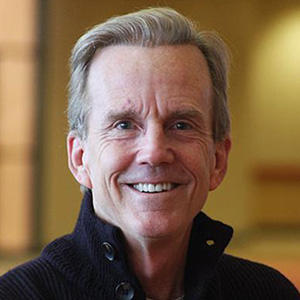
Lon Allison said he mistakenly believed if his team trained thousands of believers to share their faith as a way of life, it would happen. It didn't. Why? Allison said, "The local church tries to do so many things that it easily, and for the most part unconsciously, sidelines evangelism in lieu of the pressing responsibility to care for and disciple the existing flock." Allison is vice-chair of the Mission America Coalition.
Read more
Aspiring to the Great Commission Not Enough
"Many church leaders are recognizing a heartbreaking reality. We have received the good news of the gospel but we're not actually communicating that good news," said Ed Stetzer. Aspirations are not enough.
Read more
Church Growth Tips from 2800 Years Ago
Steve Murrell draws principles from the book of Isaiah, from thousands of years ago, that still apply to church growth today. Based on Isaiah's teaching, Murrell encourages church leaders to enlarge their vision, stretch their faith, lengthen their reach, and strengthen their foundation.
Read more
Dream...Smaller? When Aspiration Overwhelms
"We love action points, we love exhortations that get us fired up, we love dreaming big, we love the idea that God wants to use in miraculous ways, and we rightly want to address the brokenness of our world and change it," said Christine Hoover. However, the problem comes when dreaming big leads to being overwhelmed.
Read more
5 Tips for Evangelistic Intentionality
Faithful evangelism is crucial to the health of a church, said Erik Raymond. "Most Christians agree and even want to see this happen but often struggle with implementing it in their lives." In this article, Raymond provides practical suggestions to foster more evangelistic faithfulness.
Read more
Research and Trends
Meet the Whatevers Most of those with no religious affiliation are neither atheist or agnostic: the majority of them identify as "nothing in particular" (some of whom are believers). They might best be called the "Whatever" generation. (Christian News Wire 5/12/15)
A Less Christian America - That's the top finding in the Pew Research Center's newest report, America's Changing Religious Landscape. Although 70% of Americans still identify as Christian, the survey shows dramatic shifts as more people move out the doors of denominations, shedding spiritual connections along the way. Atheists and agnostics have nearly doubled their share of the religious marketplace, and overall indifference to religion of any sort is rising as well. Only the historically black Protestant churches have held a steady grip through the years of change. The percentage of people who describe themselves as Christians fell from 78.4% to 70.6% over the past seven years. This includes people in virtually all demographic groups. While nearly 86% of Americans say they grew up as Christians, 19% say they aren't so anymore. In fact, there are more than four former Christians for every convert to Christianity. Although evangelicals are part of the decline, their slide has been less steep. (USA Today 5/12/15)
Unchurched Currently 38% of U.S. adults qualify as "unchurched" under Barna's definition (38%). Unchurched adults have not attended a church service, except for a holiday or special occasion, at any time within the past 6 months. (Barna Cities 4/24/15)
What Do Americans Believe About Jesus? According to a recent Barna Group study 92% of U.S. adults say Jesus Christ was a real person who actually lived. Only 87% of Millennials hold this view. 56% of American adults believe Jesus was God while 26% say he was only a religious or spiritual leader like Mohammed or the Buddha. The remaining 18% aren't sure whether Jesus was divine. 52% of Americans agree, either strongly or somewhat, that while he lived on earth, Jesus Christ was human and committed sins like other people; 46% disagree. More than six in 10 Americans say they have made a commitment to Jesus Christ that is still important in their life today (68% of women vs. 56% of men). Only 60% of white Americans report having done so, compared to 80% of black Americans and 65% of all non-white Americans. (Barna Group 4/1/15)
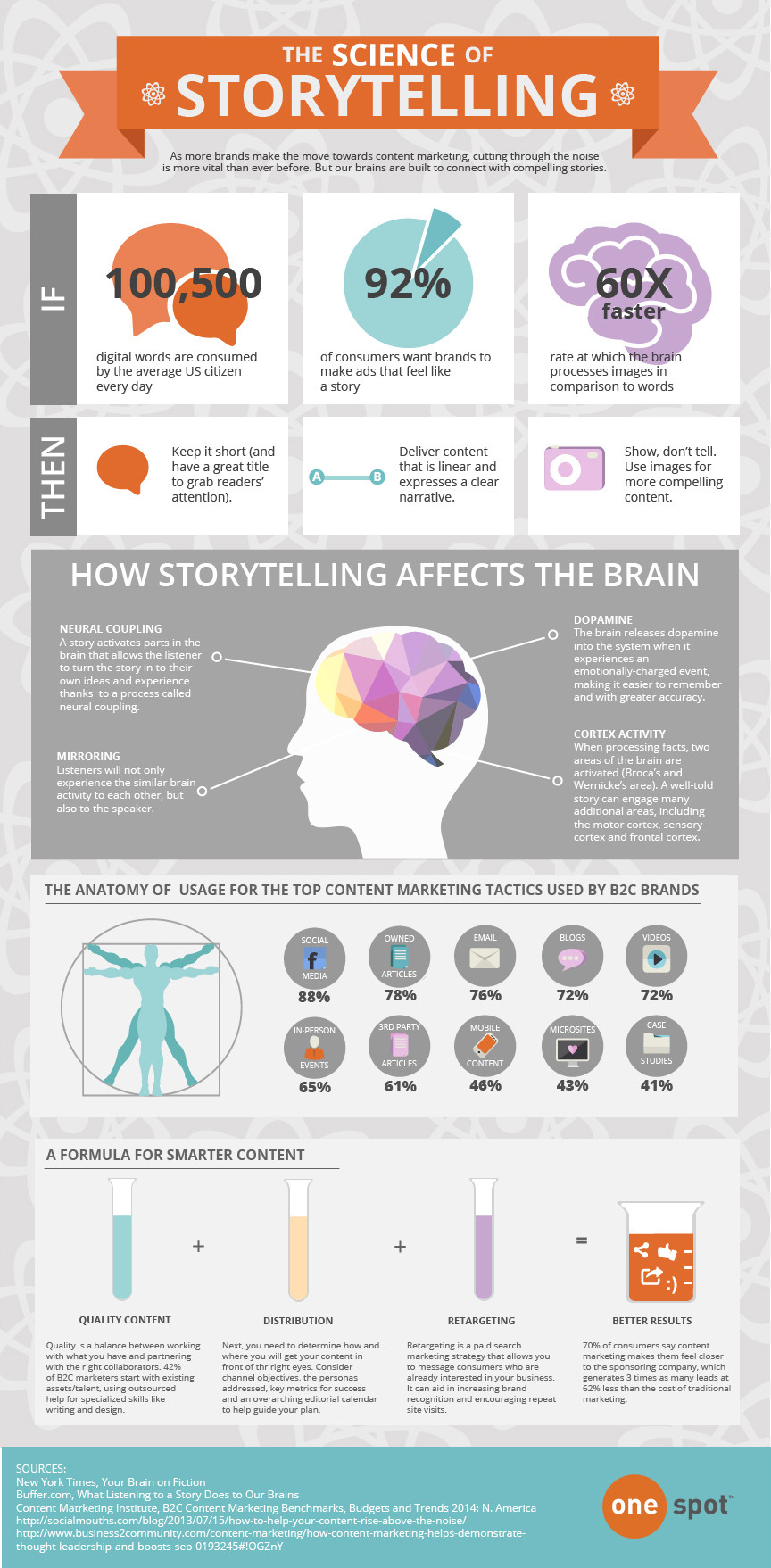
Brains Built to Connect with Compelling Stories
Millennial Adults Unaffiliated A high percentage of younger members of the Millennial generation (those who have entered adulthood in just the last several years) are religious "nones." At the same time, an increasing share of older Millennials also identify as "nones" with more members of that group rejecting religious labels in recent years. Overall, 35% of adult Millennials are religiously unaffiliated. Far more Millennials say they have no religious affiliation compared with those who identify as evangelical Protestants (21%), Catholics (16%) or mainline Protestants (11%). The 35% of Millennials who do not identify with a religion is double the share of unaffiliated Baby Boomers (17%) and more than three times the share of members of the Silent generation (11%). Moreover, 36% of the youngest Millennials (18 to 24) eschew an affiliation with organized religion. While some Millennials are leaving their childhood religion to become unaffiliated, most Millennials who were raised without a religious affiliation are remaining religious "nones" in adulthood. (Fact Tank 5/13/15)
Most Non-Religious Age According to the Pew Research Religion & Public Life Project, 25% of adults under 30 are not affiliated with any religion, making them the most non-religious age cohort. A ‛07 Pew Forum survey confirmed the trend, showing only 1/3 of adults under 30 self-reported as church attendees "at least once a week." The rate for those over 30 was 41%. (Insights on Religion 4/23/15)
Post-Christian Based on Barna's aggregate metric, 38% U.S. adults qualify as post-Christian. This includes 10% who are highly post-Christian and 28% who are moderately so. (Barna Group 3/24/15)
US as Mission Field - Americans need to learn to see their country as the mission field it has become. There are lessons we can learn and apply from other parts of the world that can help us continue to live our faith and witness to those around us, says Rev. Max Wilkins, president and CEO of the Mission Society. (Christian News Wire 5/11/215)
Least and Most Religious Countries A global survey by WIN/Gallup International has ranked the U.K. as among the least religious countries in the world along with Czech Republic, Sweden, Japan and China. Only 30% of Britons describe themselves as religious; 53% are not religious, and 13% say they're atheists. In the U.S., only 56% said they are religious; 33% are not, and 6% identify as atheists. Worldwide, 63% claim to be religious, 22% were not, 11% as atheists, and 4% did not give an answer. Morocco, Georgia, Bangladesh, Armenia and Thailand made up the list of countries where people most often described themselves as religious. The total number of religiously unaffiliated people in the world is 16% and is projected to drop to 15% by 2050. (Christian Post 4/13/15)
2 Billion Bibles Gideons International has just surpassed the 2 billion mark in distributing Bibles and New Testaments. The distribution of the first billion Bibles spanned 93 years (1908 to 2001). This second billion was attained in less than 14 years (2002 to 2015). Gideons currently distribute over 80 million Scriptures annually, and the numbers are growing. Through the efforts of over 300,000 members in 200 countries, territories and possessions, The Gideons share more than two Scriptures every second of every day?in over 90 languages. (The Exchange 5/4/15)
Why Don't People Read Their Bibles More? Recent American Bible Society research by Barna Research finds 42% of Americans say they are too busy. Others have left church (12%) or say a difficult life experience made them doubt their faith (12%). (CT Gleanings 4/9/15)
Infallible More Americans see the Bible as the infallible and inspired word of God with some symbolism, which should not be taken literally, according to the American Bible Society's State of the Bible 2015 report, produced by the Barna Group. More adults believe the Bible to be inspired (with some symbolism) than literal. 33% says the Bible is the inspired word of God and has no errors, though some verses are meant to be symbolic. This compares to 30% a year ago. 22% believe the Bible is the actual word of God and should be taken literally, while 13%, believe it is the inspired word of God but comes with some factual errors. 19% express strong skepticism of Scripture, viewing it as just another book of teachings written by men that contains stories and advice, while 11% say it is not inspired but tells how writers understood the ways and principles of God. Older adults are more likely to believe the Bible is the literal word of God, while Millennials are more likely to see it as just another book of teachings. (Christian Post 4/11/15)
Stop Making Church Cool Church attendance has plummeted among young adults. In the U.S. 59% of people 18 to 29 with a Christian background have, at some point, dropped out. According to the Pew Forum on Religion and Public Life, among those who came of age around the year 2000, a solid quarter claim no religious affiliation, making them significantly more disconnected from faith than Gen-Xers were at a comparable point in their lives and twice as detached as Boomers were as young adults. In response, many churches have sought to lure Millennials back by focusing on style points: cooler bands, hipper worship, edgier programming and impressive technology. Recent Barna Group research found 67% of Millennials prefer a "classic" church over a "trendy" one, and 77% would choose a "sanctuary" over an "auditorium." They also exhibit an increasing aversion to exclusive, closed-minded religious communities masquerading as hip places. Barna's David Kinnaman said "Millennials are not disillusioned with tradition; they are frustrated with slick or shallow expressions of religion." (Washington Post 4/30/15)
THE CHURCH
Evangelicalism Is Growing in America - From ‛07 to ‛14 the number of evangelicals in America rose from 59.8 million to 62.2 million, according to Pew Research. While evangelicals' share of the overall U.S. population dropped by 0.9% over the last 7 years based on denominational affiliation, the percentage of U.S. adults who self-identify as evangelical rose from 34% to 35% over the same period of time. Most significantly, more than one-third of Americans call themselves evangelical. And, despite what many are saying, evangelicals are attending church more than ever as well. The 2014 General Social Survey reports a greater percentage of evangelicals (55%) are attending church than in any other time of the last 40 years. (USA Today 5/14/15)
Student Religious Group Restrictions A new LifeWay Research study finds mixed opinions about whether student religious groups should be allowed to mandate leaders' beliefs or, because of their religious beliefs, restrict LGBT members from leadership roles. Yet 68% say colleges should not withhold funding or meeting space from such organizations. While groups say their belief statements and ethics define their identity, numerous college officials citing what are known as "all-comers" rules insist groups and their leadership be open to all students, no matter what. Researchers also asked whether colleges should restrict student groups that do not allow gay and lesbian students to be leaders. 38% say colleges should give funding and meeting space only to groups that allow gay and lesbian leaders vs. 57% who disagree with that restriction. Yet, when those who support the restriction were asked whether colleges should "exempt religious organizations that object to homosexual behavior from this requirement," 29% affirmed religious organizations should be exempt. (Baptist Press 5/5/15)
Dying for Their Faith Each year, 100 million Christians suffer persecution, imprisonment and even death for their sacred religious beliefs. According to The Voice of the Martyrs, "more people have died for their faith in Christ in the last 100 years" than in the previous 19 centuries.
The Role of Faith in the Military According the latest Department of Defense statistics on religion, there were 12,360 Southern Baptists among the US military's 1.3 million members on active duty as of December ‛14. There were also 12,764 atheists?404 more than Southern Baptists. By contrast, Southern Baptists outnumbered atheists by about 10,000 in ‛09, with 16,975 Southern Baptists and only 6,702 atheists on active duty. Overall 69.8% active-duty service members identified as Christian in ‛14. Non-denominational Christians (26%), Nones (20.4%), and Roman Catholics (20.4%) are the largest groups, followed by Baptists (9.3%), which is a separate category from Southern Baptists. Pentagon numbers show a slight decline in the percentage of Christians in the military over the past 6 years, from 71.2% in March ‛09 to 69.8 % in December ‛14. Roman Catholics (down from 285,763 to 246,968) and Nones (down from 281,710 to 267,479) both declined, while non-denominational Christians (up from 262,646 to 345,888) grew. (CT Gleanings 4/23/15)
Most Hispanics in the U.S. continue to belong to the Roman Catholic Church. But the Catholic share of the Hispanic population is declining, while rising numbers of Hispanics are Protestant or unaffiliated. Indeed, 24% of Hispanic adults in the U.S. are now former Catholics, according to the Pew Research Center. 55% of the nation's estimated 35.4 million Latino adults?or about 19.6 million?identify as Catholic today. 22% are Protestant (including 16% who describe themselves as born-again or evangelical) and 18% are religiously unaffiliated. (Pew Research Center 5/7/14)
Religious Diversity U.S. racial and ethnic minorities now make up 41% of Catholics (up from 35% in ‛07), 24% of evangelicals (up from 19%) and 14% of mainline Protestants (up from 9%). (America's Changing Religious Landscape)
Why People Leave Denominations Thom Rainer, president of LifeWay Christian Resources, recently conducted an informal Twitter poll and asked why people are moving to non-denominational congregations from churches affiliated with denominations. The top 8 responses were:
- Denominational churches have a negative reputation. Some respondents used the phrase "negative brand" to communicate this reason.
- They are known more for what they are against than what they are for.
- There is too much infighting and politics.
- The churches are too liberal.
- There is a general waning of institutional loyalty.
- They have inefficient systems and organizations. They are too bureaucratic.
- Some of the respondents could see no perceived benefit to belonging.
- They are not good stewards of their financial resources. (Christian Post 5/2/15)
Church Online Giving Stats According to the ‛13 State of the Plate survey, 36% of members donated electronically. As of ‛12, 42% of churches offered online giving. That's up from 11% in ‛11. Online giving for faith-based organizations grew by 18.1% in ‛13, the largest increase in any sector. A ‛11 report found online giving increased donations by 10?30%. 63% of churches with a budget surplus used online giving in a ‛12 survey. Churches who do not offer a giving alternative to the offering plate are placing a significant roadblock in front of Millennials and Gen-Xers who want to worship through giving to the church. Many of them neither carry cash nor keep a checkbook, yet we still want to give to the mission of the local church. (ChurchThought.com 4/15)
5 Questions to Assess Your Church's Health
- Is the rate of worship attenders to conversions/baptisms growing or declining?
- Is the percentage of worship attenders who also attend Sunday school/small groups growing or declining?
- Do you have a clearly defined disciple making strategy? And is the average attender familiar enough with it to repeat it?
- Are you multiplying leadership?
- Have you become an internally focused church? (Facts & Trends 5/6/15)
Statistics on Pastors According to a study by Dr. Richard J. Krejcir from the Francis A. Shaeffer Institute of Church Leadership and Development (2007 "Statistics on Pastors"), 28% of pastors read the Bible for personal enjoyment vs. only for study/sermon preparation. 38% are either divorced or in the process of divorce. 70% admitted to having no close personal friend or confidant. 77% did not feel like they had a good or satisfying marriage. 71% felt burned out, fatigued and fighting depression on a weekly or even daily basis. 30% admitted to either being in, or having been in, a sexual affair while in ministry. (Thriving Pastor 4/20/15)
Giving to charities topped $241 billion in ‛14, and over 30% of that went to faith-based groups, but that compares to 57% a decade ago. What changed? Several key generational shifts have driven this change, as well as well-publicized church scandals and the recession. Most importantly, younger generations don't trust institutions as much, tithing at a church isn't a matter of personal identity, and churches have not kept pace with the many giving technologies available. (Narratoronline.com 2/15/15)
Most Influential Franklin Graham, Joel Osteen and Mark Burnett and Roma Downey topped Newsmax's list of the 100 most influential Christians in America. Billy Graham also made the list at No. 5. (Christian Post 4/21/15)
THE CULTURE
Growing Urban Communities Cities all over the world are growing faster than most of us realize, to the point that the planet will be 90% urban by the end of this century (2100). We've already crossed the halfway mark. (Serving God in Today's Cities Dean Merrill & Patrick Johnstone, GMI 2015)
Child Poverty Although the U.S. is one of the wealthiest nations in the world, one in five kids (more than 16 million) live in households with incomes below the federal poverty level?about $32,450 for a family of four. Another 22% live in families above the poverty level but still have low income. (National Center for Children in Poverty)
Most Prisoners Today the U.S. has more people in prison than any other country in the world?more than 2 million. A disproportionate number of them are African Americans. (Religion & Ethics Newsletter 4/24/15)
Hispanic Immigrants Two-thirds of the nearly 32 million Christian immigrants in the U.S. come from the following 10 countries: Mexico (57%), Philippines (9%), Puerto Rico (7%), El Salvador (5%), Germany (5%), Cuba (4%), Dominican Republic (4%), Guatemala (3%), Jamaica (3%), United Kingdom (3%). (Christianity Today 5/15)
Nonprofits Can't Meet Service Demands 75% of U.S. nonprofits reported ending ‛14 at break-even or with a surplus, but just as many continue to report increased demand for their services. The Nonprofit Finance Fund's 2015 Annual State of the Nonprofit Sector Survey finds 76% of the 5,451 nonprofits surveyed reported an increase in demand. 52% said they could not meet demand. Among the top community needs were: Affordable housing, 35%; Youth development programs, 26%; Job availability, 23% Access to health care, 21%; and Access to strong, well-performing schools, 19%. (Non-Profit Times 4/27/15)
Praising Children An Op Ed in the New York Times says parents unconsciously steer their children toward behavior they think will lead to achievement. Parents glow with extra fervor when their child studies hard, practices hard, wins first place, gets into a prestigious college. (New York Times 4/24/15)
Unmarried Birthrates Decline A new National Center for Health Statistics finds unmarried childbearing has declined at its steepest rate since 1940 over the last few years, both in terms of rate and real numbers. The rate declined 14% from its all-time high in ‛08. However, increasingly, unmarried births are taking place in cohabiting relationships, 58% of all out-of-wedlock births today, up from 41% in ‛02. These are also increasingly intended pregnancies; 20% in ‛02 vs. 29% in ‛10. In relation to age, non-marital births have declined since ‛07 for all women up to age 35 but have increased for those over 35. (FocusontheFamily.com)
Remarried According to the U.S. Census Bureau, 42 million adults have married more than once, up from 22 million in 1980 and 14 million in 1960. In 2013 20% of all marriages included remarriage for one spouse, 20% remarriage for both spouses and 60% were first marriages for both spouses. (PewResearch.org)
Smaller Families 48% of Americans say two is the ideal number of children for a family to have, reflecting a decades-long preference for a smaller family over a larger one. But according to Gallup, in 1971 the ideal American family included 2.9 kids and 3.6 in 1936. (Fact Tank 5/8/15)
Never-Marrieds at Historic High Pew Research Center reports, as of ‛12, one in five U.S. adults 25 and older have never married vs. one in 10 in 1960. Men are more likely than women to have never married: 23% vs. 17%. The median age for marriage is now 27for women and 29 for men. 24% of never-married 25 to 34s are living with a partner. 46% of Americans say society is better off if people make marriage and having children a priority vs. 50% who say it is just as well off if people have other priorities. 68% believe it is important for couples to marry if they intend spend the rest of their lives together. (Pew Social Trends)
Mixing Work and Personal Life Causes Guilt Harris Poll's recent survey of full- and part-time workers in six countries (France, Germany, Japan, Spain, the U.K. and the U.S.) says 58% feel guilty about the blurring of their work and personal lives through their mobile device, particularly when receiving personal communications when at work. That contrasts with 46% of non-Generation Mobile workers. 61% feel guilty about performing work tasks during personal time or holidays vs. 47% of non-Generation Mobile workers. Generation Mobile said they did 26% of their work on a mobile device vs. 17% done by non-Generation Mobile workers. 82% of Generation Mobile conduct at least one personal task on their mobile device per day during work hours vs. 72% of non-Generation Mobile workers and do at least one work task during personal time vs. 54% among non-Generation Mobile workers. (Biz Report 4/28/15)
ISIS has become one of the world's best-funded terrorist groups, earning most of its profits by selling seized oil. But details keep emerging of the estimated No. 2 source of its billion-dollar revenue stream: looting biblical-era artifacts. (CT Online 4/30/15)
Heavy Drinking Increase An Institute for Health Metrics and Evaluation at the Univ. of Washington study of adults 21 and up, published Thursday in the American Journal of Public Health, finds nationwide levels of heavy and binge drinking on the rise, led by increases among women?although women still drink much less than men. The percentage of people who drink is not changing much, but among drinkers more heavy drinking and binge drinking is occurring. (USA Today 4/23/15)
500 Books Children in homes with more than 500 books have language skills more than two years ahead of those in households with fewer than 10 books. (World Book Day Infographic 4/15)
Woefully Unprepared A new Employee Benefit Research Institute survey reveals 28% of U.S. workers have less than $1,000 in savings and investments for retirement, not counting their residence or pensions. 57% have less than $25,000. (USA Today 4/21/15)
Kids = More Joy & Stress U.S. adults with children under 18 at home are more likely than those who don't have children to say they smile or laugh a lot on any given day: 84% vs 80%. At the same time, those with children at home experience greater stress: 45% vs. 37%. (Gallup)
Fast Facts:
- As of ‛13, 33% of all U.S. Catholics were Hispanic, according to Pew Research.
- Among Hispanics who have left Catholicism and now identify as Protestants, 28% are Pentecostal.
- Among Hispanic Protestants overall, two-thirds either belong to a traditional Pentecostal denomination (29%) or describe themselves as charismatic or Pentecostal (38%).
- San Francisco metro area tops the list of America's most churchless cities.
- There are more than 12 million people in the U.S. who affiliate with non-denominational churches.
- There at least 35,000 non-denominational churches in America.
- Non-denominational churches are in 88% of the counties in the United States.
- Non-denominational churches are among the five largest religious groups in 48 of the 50 states and Washington D.C.
- 42% of U.S. evangelicals see immigration as an opportunity to introduce people to Jesus.
- 74% of U.S. immigrants are Christians (including 61% of authorized and 88% of unauthorized immigrants).
- 35% of Americans who saw a Christian movie last year rarely attend church.
- 40% of Americans view atheists negatively, rating them 33 or below on a scale of one to 100.
- 56% of Americans favor the death penalty for people convicted of murder.
- By 2050, Judaism will no longer be the largest non-Christian religion in the U.S., when Muslims are projected to be more numerous than Jews.
- A recent Barna study shows 66% of American Christians feel there is a critical gap between their calling and their daily occupation.
- 56% of U.S. adults believe Jesus was God, while 25% say he was only a religious or spiritual leader like Buddha.
- 92% of U.S. adults say Jesus Christ was a real person who actually lived.
- Two out of three Americans still believe the central tenets of Christianity: Jesus Christ was the Son of God who was resurrected on Easter Day.
- The average smartphone user checks their phone 221 times a day.
- About 36 million Americans have some kind of hearing loss of which more than half are under younger than 65.
- Children who don't read well by the end of 1st grade only have a one in eight chance of catching up without costly direct intervention.
- 50% of youths with a history of substance abuse have reading problems.
- Reading to children every day puts them one year ahead of those who are not being read to.
- The average human head has 100,000 hairs. In contrast, a square inch of a cat's fur has at least 60,000 hairs. A single cat may have 30 to 50 million hairs.
- 93% of 18- to 29-year-old smartphone owners use it to avoid being bored.
- 47% of young smartphone owners use their phone to avoid interacting with the people around them at times.
- One-third of all online activity is spent watching videos.
- 73% of American teens have access to a smartphone.
- 71% of teens use more than one social network site.
- A typical U.S. teen sends and receives 30 texts per day.
- Just 37% of high school students say their parents monitor their online behavior.
- One-third of Americans believe those between the ages of 18 and 20 should have a credit card.
- 50% of Hispanic adults in the U.S. were born outside the country.
- 60% or more of Americans are lactose-intolerant.
- 85% of men in prison did not have a father in the home.
- Americans who say they have gay or lesbian friends are twice as likely to agree gay marriage should be legal.
News and Trends information compiled and edited by Gary Foster, President of Gary D Foster Consulting, a firm that assists Christian ministries and product companies in solving management, marketing, donor/customer service and product development problems. Contact Gary at: 419.238.4082, [email protected] or go to www.GaryDFoster.com.