Chairman's Letter
You Are Invited!
The Outer Limits Conference
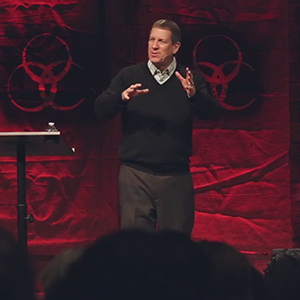
The Mission America Coalition has over 500 partners that are active ministries involved in sharing the Gospel of Jesus Christ in various ways. Some of them are denominations and local church ministries. One of our newer Mission America Coalition partners is Organic Outreach, led by Pastor Kevin Harney, author of The Organic Church. He believes that vital Christian outreach should be an organic part of every local Church. And so do I!
Organic outreach will be the major focus of the Outer Limits Conference which will take place at the Shoreline Community Church in Monterey from November 5 to 7. I plan to attend, and I pray that you will join me and hundreds of other pastors and church leaders. Please read the article in this issue about the conference and plan to join us! Kevin Harney is author of several other outstanding books as well and the lead pastor of Shoreline Community Church in Monterey, CA.

Paul and the MAC Team
Evangelism News
Outer Limits Conference Addresses Sharing Faith Naturally
November 5-7, Monterey, Calif.
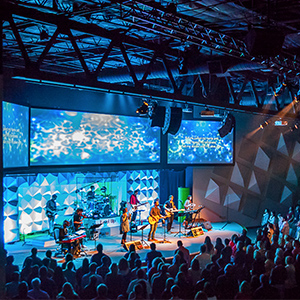
Organic Outreach Ministries is hosting The Outer Limits, a conference for all who want to share their faith in comfortable and natural ways. Teams of leaders from churches, regions, and denominations are encouraged to attend together. "Anyone who believes that the message of Jesus is too wonderful for us to keep to ourselves should be at OOC 2015," urges the website.
Conference speakers include Dave Dravecky, Ed Stetzer, Fazale Rana, Jeff Zweerink, Efrem Smith, Organic Outreach founder Kevin Harney, and more. Organic Outreach is a MAC Partner. See the website for endorsements for the conference, including one from MAC's Lon Allison.
Organic outreach is about living the kind of life that naturally draws people to Jesus. It involves speaking the kinds of words that you use in ordinary conversations and that reveal the presence of a loving God. It means loving people in a way that is genuine. Organic outreach is all about sharing our faith in a way that is authentic, real, and feels natural to the people around us.
Outreach is more than just the proclamation of biblical truth, though this is an important part of the process. It is also about loving people, serving in our community, being models of Christ's grace, building authentic friendships with those who are far from God, and telling our stories of God's presence and power. Outreach is not just an occasional church field trip to visit those who are spiritually disconnected from God; it's a lifelong journey as we follow Jesus into the world.
Register Now
Next Generation Alliance Empowers Younger Evangelists at Palau NYC Festival
During Luis Palau's CityFest in New York City in July, the Next Generation Alliance (NGA) gathered about 100 evangelists for three days of equipping, encouragement, and building relationships. About 40 NGA partner evangelists spoke or participated in the 115 outreach events leading up to the largest events in Times Square and Central Park. Mark Slaughter, MAC / InterVarsity, provided this report on the event: With "one message but many expressions," these evangelists reflected a beautiful diversity of ethnicity, church backgrounds, age, and ministry styles and focus. Still, there was a powerful unity in proclaiming Jesus Christ relevantly in this generation through a variety of approaches (festivals, neighborhood outreaches, churches, colleges, action sports, music, spoken word, film, and social media).
Sessions featured the personal life of the evangelist and finishing the race well, as well as strategic sessions on proclaiming the gospel in word and deed, and mobilizing churches city-wide. A panel of five NYC pastors shared their reflections on the past three years as the Palau team served over 1,750 diverse churches in helping them to pray, mobilize, and collaborate together to serve their neighborhoods and city and proclaim Jesus. These NGA evangelists then attended the large festivals in Times Square and Central Park, where they could pray with people who responded to the invitation.
Through NGA, the Luis Palau Association is investing in about 600 member evangelists (mostly younger) whom God is raising up for these days!
Thousands Commit to Christ at NYC CityFest
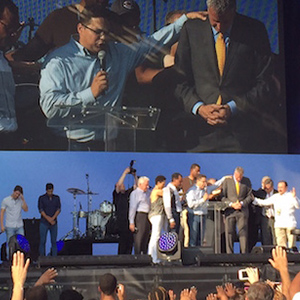
It was a night of revival in the heart of New York City as Luis Palau preached the gospel to 60,000 at CityFest in July. Palau told New York City Mayor Bill Blasio, "I have been praying for you," and then Palau, evangelistic leaders, and local pastors gathered around the mayor to pray for him. The Palau Evangelistic Association says at first count there were 3,673 commitments to Christ following Palau's message, and there are more responses still being counted.
Read full story
Truth for A New Generation Hosts Evangelistic Apologetics Event
Apologetics and the wealth of data that affirms Christianity has a wonderful, two-fold benefit: Apologetics "reaches and teaches." It "equips and deepens the believer," but it can also "persuade the lost," says the website for the next Truth for A New Generation (TNG) conference. "Jesus - America's Hope" is the theme for the event and Christians are invited to bring their nonChristian friends who are seeking spiritually. At previous events, skeptics, searchers, agnostics, and unbelievers with various objections have found a personal relationship with Jesus Christ, says the TNG website - "This is an event that God can use to enrich believers and evangelize non-believers." Registration is open to anyone of any age, but the event is especially suited for adults, youth and college students, parents, youth workers, pastors, Sunday School/small group leaders/teachers, church leaders, concerned individuals-and people who are spiritually searching. MAC's LOVE2020 initiative is a sponsor of the event.
TNG Website
Urban Hope Coaches Give Back to Next Generation in N.C.

Young men who were part of a sports mentoring program when they were kids are now giving back as volunteer coaches for the same ministry. Ten years ago, Ed Cvelich began a basketball program that was part of a year-round inner city initiative of the Navigators called Urban Hope in the Walltown neighborhood in Durham, North Carolina. Urban Hope is focused on bridging spiritual and economic resources with youth and families to empower youth. The program seeks to develop God-given potential through academics, sports, life skills, discipleship, and financial literacy while maintaining a foundation centered in Christ. Coach TJ said, "Urban Hope has played a major role in my own life. My vision is to help kids grow and accomplish their goals. I want to see them become successful and then also desire to give back to the next generation."
Navigators website
College Students Help Churches Reach Ohio Community
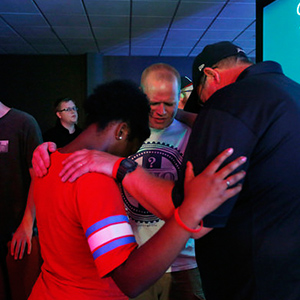
College students came together in the greater Columbus, Ohio, area this summer as thousands of volunteers from across the U.S. and Canada took part in Crossover, an annual evangelistic outreach by Southern Baptists in the host city of the Southern Baptist Convention. The event was the culmination of a year-long effort to reach the city with the gospel and build connections in the community. During the Ohio event students presented the gospel to at least 2,500 people with more than 250 salvations reported on one day.
In addition to the Crossover outreach, students participated in a 10-day event called ForColumbus that included city beautification initiatives, prayer-walking, creation of community gardens and other outreach at 47 venues throughout the area. While working on their projects each day, students and their leaders were challenged to have at least three gospel conversations with residents. "Before ForColumbus, I was not intentional about sharing the gospel," said college graduate Rebecca Fountain. "I was really nervous, at first, to initiate gospel conversations...I can say I feel really comfortable doing that now."
The outreach was a partnership between the North American Mission Board and the local Southern Baptist association and included churches throughout the host city as well as volunteers from churches throughout North America.
North American Mission Board website
Churches and Mayor Unite to Improve City of Portland

Portland, Ore., is among the most unchurched and politically progressive cities in the nation. In 2007, Kevin Palau and a few dozen pastors approached Portland's mayor and posed the question: How can we serve you with no strings attached? Officials identified five initial areas of need-hunger, homelessness, healthcare, the environment, and public schools-and so began a partnership, CityServe, between the city and a band of churches seeking to live out the gospel message. Since then, the CityServe model has spread like wildfire, inspiring communities across the country to take up the cause in their own cities.
In his book, Unlikely, Kevin Palau tells the story of the inception of CityServe and also challenges readers to evaluate their understanding of the gospel. Today's church finds itself torn between social justice and direct proclamation. Palau proposes a both/and scenario, showing how the gospel can truly penetrate a region-through word and deed.
CityServe Portland website
Texas School Joins with Churches to Help Parents and Kids Succeed
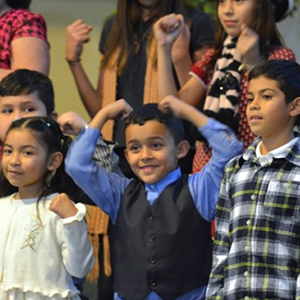
Parent University is a 13-week curriculum that teaches parents 40 developmental assets to help their children succeed. Two years ago, Principal Marta Plata of Manuel Jara Elementary School in Fort Worth, Texas, recognized her school needed help. The school collaborated with Primera Baptist Church in Fort Worth, a congregation that had already adopted the elementary school two years before, and launched the Parent University program. The curriculum provides an interactive guide to engage parents in their children's education. Rafael Berlanga, pastor of the church, said the partnership through Parent University has made a positive impact on the community. "Parent University was designed to function as a community partnership between schools and community leaders-churches are part of the community," Berlanga said. "Church-school partnerships are a great way for this curriculum, this program, to affect change in our communities, in our families."
Read article
Czech Discipling Movement Transforming Europe through Youth

A movement of God among the youth of the Czech Republic and in Central and Eastern Europe has sprung up to grow disciples who make disciples, and ultimately who transform cultures. Luis and Doris Bush (Transform World Connections) report that there is a growing youth community who are willing to take risks, commit, and devote themselves to following Christ no matter what circumstances. The church is growing, and there is a renewed interest in spiritual things, especially among young people.
A youth leader from a Gypsy Church in Serbia said, "We are gypsies. We are nobodies here. We are always looking for where we belong. When we hear that we belong to the family of God, we welcome that with open arms."
Such reports might spur Americans to ask how young people here could experience a similar revival. As the Bushes share about Europe, Americans can draw from their assessment of the transformation. "Momentum comes when young people disciple other young people. Therefore we need to go to where the youth are. We need to get the parents involved. Help young people to dream big dreams; even societal transformation in and through family, education, media, arts and sports, church, government, and business."
Read article
9-year-old Builds Shelter for Homeless in Her Spare Time

When Hailey Fort was five, she and her mother crossed paths with a homeless man in Bremerton, Washington, and she begged her mom to buy him a sandwich. That experience changed the way she thinks. She's now nine years old, and she spends her spare time building mobile shelters for the homeless, growing food to give away, fundraising for her projects and even getting donations from businesses so she can provide toiletries to those in need.
"It just doesn't seem right that there are homeless people," Hailey said. "I think everyone should have a place to live."
Hailey's goal is to grow 250 pounds of food to feed the homeless, build 12 shelters and deliver thousands of toiletry items to those who need support. Her actions prove that it doesn't take a massive initiative to make a difference. All it takes is passion for a group of people who have a need.
Read article
Response Teams Minister in Kentucky Floods
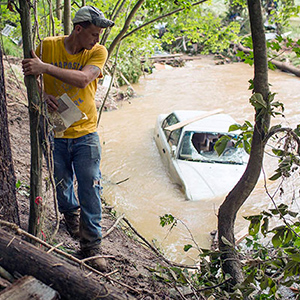
Crisis-trained chaplains and disaster teams are ministering in Johnson County, Kentucky, after deadly floods devastated the area. The Billy Graham Rapid Response Team (RRT) has sent a half-dozen chaplains and a Mobile Ministry Center, and they're serving alongside sister ministry Samaritan's Purse.
Kelly Burke, manager of emergency response and logistics for the Rapid Response Team, said, "Our goal as a Rapid Response Team is to come alongside the people who have been impacted by this flooding and offer spiritual and emotional care and the hope of God's presence even in the midst of the storm."
Read more
Leaders Experience Ministry in Action in Kansas City Tour
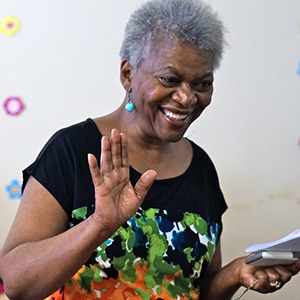
When leaders from the Evangelical Covenant Church assembled in June for their annual conference, Gather 2015, they had the opportunity to "Experience Kansas City" through a tour of four city ministries. At one stop, participants sat beneath the bridge where Freedom Covenant Church leads weekly worship services for the homeless. The church set up the Worship Wagon and the group sang and prayed together.
"While we were worshiping, a homeless man came under the shade of the bridge to listen to the music and asked if there was any cold water to drink," said Pastor Lee Jost, one of the tour leaders. "After being given water, he stayed to listen to the worship music."
The tour visited a family health clinic as well as a family resource center. The group also stopped at a county-community collaborative project that provides a positive alternative to incarceration for youth who have violated their probation and are at risk of being placed in detention facilities. "These youth are not a risk to the community, but they are in need of positive role models and structure that will help them make more positive decisions in their lives," Jost said.
Through the tour, ministry leaders learned from other leaders how they might reach their own communities. The Evangelical Covenant Church denomination is a member if the Mission America Coalition.
Evangelical Covenant website
Commentary
How Love Can Change Our Gospel Witness

"To grow in evangelism, we actually don't need to focus on evangelism. We need, rather, to practice focusing on God, in Christ, who works through His Spirit and into and through the circumstances of our everyday lives," says Byron Spradlin. He speaks of this race of God moving "into and through our being" in this commentary about loving our neighbors. Spradlin is the coordinator of the LOVE2020 Affinity sphere for the Arts and Entertainment.
Read more
What is Church?

"Church is not ultimately about resources or education or even theology, even though these are important. Church is about people living out the presence of Jesus, together, in community," says Stephan Bauman (World Relief). In this article for the Lausanne Movement, Bauman shares how a cell church movement in Cambodia taught him that church is both a vehicle of mission in reaching out to the greater community, and an object of mission for renewal, discipleship, and worship.
Read more
How Our Online Witness Affects Our World

"One of the most important things we can lose as Christians is the witness we have as followers of Jesus," says R. York Moore (Intervarsity USA). "Our online presence as believers can anaesthetize people to the gospel." Moore says we need to evaluate if our online contribution helps expand Christ's kingdom or hinders it.
Read more
10 Reasons We Have Not Reached the Unchurched
Why do Christians struggle to carry out the Great Commission? Thom Rainer (Lifeway) looks at the ineffectiveness of many American believers when it comes to sharing their faith in a precursor to a series offering a solution to reverse the trend.
Read more
Discipleship or Evangelism: Which is More Important?
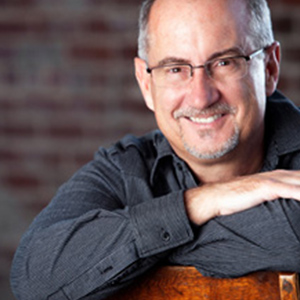
"Every church leader has a unique wiring that creates a personal bias toward either discipleship or evangelism," says Dan Reiland (12Stone Church), "which translates to an emphasis toward one or the other." He urges leaders to consider how many are coming to faith in comparison to the number who are being nurtured in their faith, and then consider how the two must work together in carrying out the Great Commission.
Read more
The Upside of Social Media
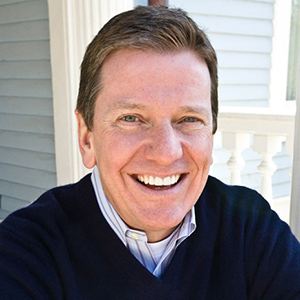
So many ministries use social media as a means of connecting with people and reaching out. Yet, there are many negatives associated with online platforms. In this commentary, Michael Hyatt talks about the positive side of social media, giving four reasons it makes the world a better place.
Read more
Tools for Evangelism
25 Ways to Be Missional in Your Neighborhood

The best way to engage people around us with the gospel is to connect in the everyday things they are already doing, says Pastor Josh Reeves (Redeemer Church, Round Rock, Texas) in an article for the Verge Network. He gives 25 ideas for everyday activities that can lead to opportunities to share the gospel.
Verge Network website
Faith@Work Call-In Bible Study

Faith@Work offers a weekly 30-minute call-in Bible study over the noon hour. Call from your desk during lunch! Join the call every Wednesday at noon in four U.S. mainland time zones by dialing 605-475-2090 and enter access code #2160630.
Navigators website
Pray for Schools
Pray4Schools (P4S) is an initiative to mobilize prayer for students from grade school through college at schools across America. A collaborative effort involving over sixteen prayer ministries and movements, P4S officially launched in July. The mission of P4S is to inform the church about the challenges in our schools and about school prayer resources, to inspire people to adopt and pray for schools, and to invite the Church in America to join in 30 days of united prayer and fasting for schools in September.
A 30-day prayer calendar is available for download and reproduction. Several MAC partners, and MAC's COO Phil Miglioratti, are part of the advisory team. Additional school prayer resources are available on the Pray4Schools website.
Pray4Schools Website
How to Start a Student Ministry in Your School

Do you know students who would make terrific leaders on their school campuses? Learn how to help a student start a ministry at at his or her school and share Christ with fellow students. Every Student Every School, a ministry of the Campus Alliance, provides resources to get started. Share this video with other potential leaders in your community. Then consider adopting your school, learning from others carrying out campus ministry, and share your story with other leaders in the Campus Alliance.
The Campus Alliance is a partnership of organizations, church denominations, students and youth leaders that share the mission of reaching out to every high school and middle school student.
Every School website
Jump Start an Outward Focus in Your Church
How does a church grow in loving and serving the people outside of its walls? Hear from three different churches about what God used to help them ignite a passion to be more externally focused and more relevant in their communities (Excerpted from the North American Christian Convention).
Church Central website
5 Leadership Questions Podcast

LifeWay's leadership development team introduces the "5 Leadership Questions" podcast to inform and encourage Christians serving as pastors, working in the business world, leading non-profits, or volunteering as leaders in their communities. In each episode, co-hosts Barnabas Piper and Todd Adkins will ask five questions of different guests on leadership topics. The aim of the podcast is to encourage leaders, share insights, and help leaders grow in character, knowledge, and skills.
LifeWay website
5x5x5 Bible Reading Plan

Grow in your knowledge of the Bible with a daily reading plan. Read through the New Testament five days a week, five minutes a day, with five questions to go deeper with this plan from Discipleship Journal. This one-year printable reading plan will take you through all 260 chapters of the New Testament with one chapter per day. The Gospels are placed throughout the year of readings so the story of Jesus is included all year.
Download plan
Share Hope with People Encountering Difficulty
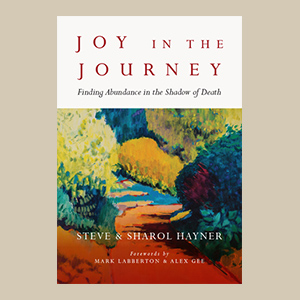
Steve Hayner was serving as president of Columbia Seminary and was healthy and fit when he found out he had terminal pancreatic cancer. As he and his wife, Sharol, connected with friends and acquaintances via the CaringBridge website, they were able to use their difficulty as a means of sharing hope that would inspire other people facing life and death issues. In his book, Joy in the Journey: Finding Abundance in the Shadow of Death the Hayners offer a glimpse into what it means to walk with God in honesty, with joy, even through great pain. The book is a ministry resource that can be used to reach out to others who are going through a difficult time.
Read more
Cultivate a Lifestyle of Doing Good

"Cultivating a lifestyle of doing good will better prepare us for God's use when larger crises occur," says Jodie Chiricosta (Somebody Cares America/International). "If we are not ready for the opportunities, we may miss them." In this article, Chiricosta shares stories of how people came to know Christ through people who showed love to them. She also gives six ways to minister to hurting people and to be available and listening for opportunities to care and share. Somebody Cares America is partnering with Mission America in the Love 2020 initiative: an effort to mobilize every Christ follower to embrace a prayer, care, share lifestyle so every person in American can be loved by at least one Christ follower by year-end 2020.
Read article
Growing Faith Where Life Happens

Churches have tried all kinds of ways to attract new and younger members-revised vision statements, hipper worship, contemporary music, livelier sermons, bigger and better auditoriums. But there are still so many people who aren't being reached, who don't want to come to church. According to Neil Cole in Organic Church: Growing Faith Where Life Happens if we want to connect with those who are not coming to church, we must go where people congregate. Cole shows readers how to plant the seeds of the Kingdom of God in the places where life happens and where culture is formed- restaurants, bars, coffeehouses, parks, locker rooms, and neighborhoods. Cole offers a hands-on guide for this new model of church and shows the practical aspects of implementing it.
CMA Resources website
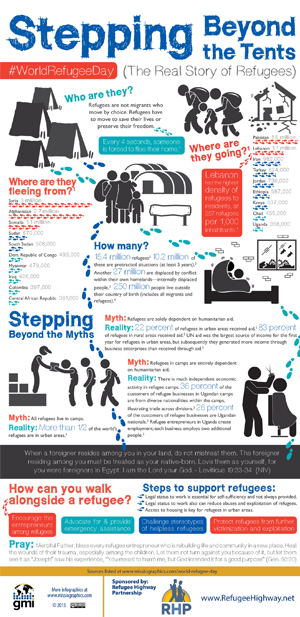
Learn More About World Refugees
The Journey: Toward A Healthy Multiplying Church
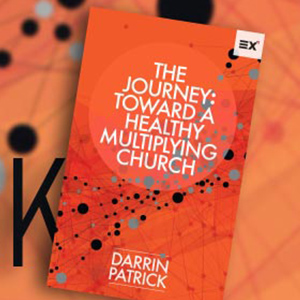
In this new eBook from Exponential, Darrin Patrick traces the story of his church, The Journey, from a small core-group meeting in the basement of a house in St. Louis, to a movement of the gospel across six Journey churches and eight church plants around the country. He addresses the tensions of keeping the church on mission while maintaining a healthy leadership culture and discusses what The Journey has learned over the past decade about becoming a movement where every member sees themselves as a missionary for their city. Download your free copy of "The Journey."
Exponential website
Five Ways to Make Your Church 'Stickier'
"A couple of years ago, for the first time in our lives, my wife and I had the freedom to choose what church we attend," says Geoff Surratt. "We were surprised how difficult it is to fit in and connect at a new church." In this free download, "Five Simple Ways to Make Your Church Stickier," Surratt shares tips he gleaned about how churches can attract, connect with, and retain new attenders.
Church Plants website
Free eBook: "Finish the Mission" by John Piper and David Mathis

From astronomy to exegesis, from apologetics to the Global South, from being missional at home to employing our resources in the global cause, Finish the Mission: Bringing the Gospel to the Unreached and Unengaged aims to breathe fresh missionary fire into a new generation as together we seek to reach the unreached and engage the unengaged. This free download includes contributors David Platt, Louie Giglio, Michael Ramsden, Ed Stetzer, Michael Oh, David Mathis, and John Piper.
Desiring God website
Research and Trends
Stunning Biblical Illiteracy The United Kingdom Bible Society surveyed British children and found many could not identify common Bible stories. When given a list of stories, almost one in three didn't choose the Nativity as part of the Bible and 59% didn't know that Jonah being swallowed by the great fish is in the Bible. British parents didn't do much better. Around 30% don't know Adam and Eve, David and Goliath, or the Good Samaritan are in the Bible. Even more, 27% think Superman is or might be a biblical story. More than one in three believes the same about Harry Potter. And 54% believe The Hunger Games is or might be a story from the Bible. The lack of biblical literacy results in a lack of biblical doctrine. LifeWay Research found that while 67% of Americans believe heaven is a real place, 45% believe there are many ways to get there, including one in five evangelicals. 59% of U.S. evangelicals believe the Holy Spirit is a force and not a personal being. Ironically nine out of 10 American homes have at least one Bible. (The Exchange 7/6/15)
Getting Out the Good News Sarah Eekhoff Zylstra wrote, "It took nearly 2,000 years for the gospel to spread from the early church to nearly half the world's population. In 1900, 45.7% of people everywhere were aware of the gospel, according to the Center for the Study of Global Christianity (CSGC) at Gordon-Conwell Seminary. More than 100 years later, that number has grown to more than 70%. Given that the number of mission organizations has grown from 2,200 in 1970 to 5,100 in 2015, the whole world should soon hear the Good News, right? Not so fast, says the CSGC. By 2050, it predicts only another 2% of the world's population will be evangelized, totaling 72%. The root of the slowdown: babies, rival religions, and the painstaking work of building disciples." (Christianity Today, 6/29/15)
Second largest religiously unaffiliated people, sometimes called "nones," account for 16% of the world's population, and they make up the largest "religious group" in seven countries and territories. They are also the second-largest group in 48% of the world's nations. While either Christians or Muslims make up the largest religious group in 9 of 10 nations, "nones" rank second in size in most of the Americas and Europe, as well as in many countries in sub-Saharan Africa. Of the 112 countries and territories in which the unaffiliated rank second, Christians are the largest religion in 106. In many of these nations, including the U.S. and most of Western Europe, "nones" are a substantial minority. Christians are the second-largest religious group in 43 countries, including much of predominantly Muslim North Africa and the Middle East. Muslims are the second-largest group in 30 countries. Islam ranks second to Christianity in many African countries as well as India. (Pew Research Center 6/22/15)
Church Attenders Don't Read the Bible Only 45% of Americans who regularly attend church read the Bible more than once a week finds a recent LifeWay Research study. This number includes 19% who read it daily. Over 40% read their Bible occasionally, maybe once or twice a month while 19% never read the Bible. (The Exchange 7/6/15)
Young Women Leaving the Church 62% of unchurched women still say they are Christians, even though they haven't attended a church service in at least six months, finds a new Barna Group study. However, among younger Christians, the number who have not only left the church but also left the faith is growing. Just 46% of unchurched Millennial women self-identify as Christian. The number who identify as atheist or agnostic has risen from 8% in ‛00 to 11% today, among Millennial women it's 22% vs. 18% in ‛05. (Barna Group 6/25/15)
Young People are Leaving Traditional Churches that have "abandoned a belief in the authority of Scripture," claims George O. Wood, general superintendent of the Assemblies of God Church (USA). (Christian Post 5/21/15)
Competing Priorities When asked "how important it is for you personally to attend a local church," 33% women say it is very important. 27% say it is not at all important to them, and 24% say it's not too important. When asked to rank several priorities in their life, women ranked family relationships as their top priority (68%). Church or religious activities came in a distant second (11%) and only marginally inched out personal time/development (10%). (Barna Group 6/25/15)
Relational Disconnect According to Barna Research, fewer than half of American women are receiving any emotional support from people at their church or synagogue. Only 17% they feel "very" supported at church; 23% feel "somewhat supported," and 43% do not feel any emotional support from church. This relational disconnect may provide a key for understanding how women are able to disengage from churches-without strong relational bonds within a church community, women's absence from church can largely go unnoticed. (Barna Group 6/25/15)
Americans have a surprising openness to Christian churches, even those who are supposedly turned off to religion, a new survey from LifeWay Research shows. Regardless of the denomination, fewer than half the nonreligious say, "It's not for me," however they hold more favorable than unfavorable views toward Catholic, Methodist, Baptist, Lutheran, Assemblies of God and non-denominational churches. LifeWay Research's Scott McConnell said, "Just because someone has no religious preference does not mean they have closed the door to the Christian church or a denomination as being something that can meet needs in their lives." (Baptist Press 6/3/15)
Americans Have Less Confidence in organized religion today than ever before measured, finds a new Gallup poll. In the ‛80s the church and organized religion were the #1 in Gallup's annual measure of confidence in institutions; today it is #4. It is now ranked behind the military, small business and the police, but still ahead of the medical system, Congress and the media. In the mid-‛70s, nearly 70% of people had "a great deal or quite a lot" of confidence in the church or organized religion vs. 42% today. (The Exchange 6/18/15)
Dechurched Women While, just over half of all adult U.S. women have gone to church in the past week or past month, 38% have not been to church in the past six months. This last group represents the majority of unchurched women; they are the dechurched. 85% of unchurched women are de-churched. Just 7% have never been to church at all. This means it isn't that most unchurched women are unfamiliar with or inexperienced with church; it means at some point they decided church was no longer for them. (Barna Group 6/25/15)
Youth Stick with Church Ed Stetzer said, "You may have heard the frightening statistic that 86% of evangelical youth drop out of church after high school. While the dropout rate is biggest during this transitional time, it is not nearly that large. The reality is the vast majority of youth raised by evangelical parents are still evangelicals as adults." (The Exchange 7/8/15)
Beliefs About America's Relationship with God 54% of Americans believe the nation is on the upswing and only 40% think "America's best days are behind us," finds a LifeWay Research survey. 53% believe God and America have a special relationship while 33% say the U.S. is a Christian nation. Women are significantly more likely than men (58% vs. 49%) to believe God has a special relationship with the U.S. 63% of Americans 45-54 think God has a special relationship with the nation compared with 48% of those 18-44. Evangelical Christians are the most likely to believe in a special relationship, with 67% agreeing. Among evangelicals 45 and older, the share soars to 71%. (The Exchange 7/3/15)
Millennial Faith Millennials are markedly less likely to say a "religious life" is important to them compared with Xers, 43% vs. 53%. Silents and Boomers were 68% and 59%. (Focus on the Family Pulse Check 7/13/15)
Generation Y Becomes Generation Z Sociologists aren't quite sure how to classify the generation following Generation Y. Some are calling them Generation Z. As we relate to this new generation, there are some practical trends to know that can help youth workers reach them with the gospel.
- Confidence is morphing into caution. Recession, terrorism, debt, racial unrest and more have eroded the confidence young people once had.
- Idealism is morphing into pragmatism as they no longer get everything they want.
- Attaining an education is morphing into hacking one. Kids are finding ways to earn college credit in nontraditional ways with internet studies.
- Spending money is morphing into saving money.
- Consuming media is morphing into creating media.
- Viral messages are morphing into vanishing messages. They prefer messaging that disappears, versus methods that leave a digital trail.
- Text messaging is morphing into iconic messaging with images, symbols and icons.
- Attention spans are 6-8 seconds, and approximately 11% have ADHD.
(Growing Leaders 7/2/15)
Global concern about religious freedom is widespread, and data shows such concern to be warranted. For example, Pew Research shows more than 75% of the world's people live in countries with high religious restrictions, up from 66% in ‛07. Pew's measurement of hostile acts involving religion in America climbed 63% from ‛07 to ‛13, and its accounting of government restrictions on religion nearly doubled. More than half of Americans and 70% of Protestant senior pastors say religious liberty is on the decline. 44% and 34% of women view the impact of Islam as a risk to American religious freedom. Young adults and Hispanics are much less likely than their parents and grandparents to perceive Islam as a threat to religious freedom. (Baptist Press 6/25/15)
The hope of eternal life has remained relatively unchanged in recent decades despite a rise in secularism. In both the 1976 and 2012 General Social Survey, 75% of respondents believed in a life after death. A number of studies indicate a strong faith and a deeply held belief in the afterlife allows individuals to better cope with their own fears of mortality. A study of members of the Presbyterian Church (U.S.A.) found more frequent church attendance, involvement in church activities outside of worship and belief in life after death were all associated with less fear of the unknown beyond this life. More frequent prayer and Bible reading were related to lesser fear of dying in pain. In a study of parents of children facing life-threatening conditions, parents reported belief in an afterlife was ??reassuring,'' providing ??peace'' and ??acceptance,'' and helped them to not be afraid of their children's deaths and to trust in God to take care of their child. Reading religious texts was related to lower death anxiety among religious people, according to a study of college students and church members. Even the mortality concerns of atheists and agnostics may be eased by assurances of an afterlife, finds another study of college students. (ARDA, Ahead of the Trend, 2/17/15)
Christian Small Group Attenders are much more likely than non-group members to read their Bible regularly-67% compared to only 27%. Being involved in a small group also made Christians more likely to pray for others and confess sins to God. 92% of Protestant pastors believe their people are making significant progress in their spiritual development, but 56% admit they don't regularly assess their personal growth. Only 42% say their churches have a "well-defined" approach to group ministry. (Transformational Groups, Ed Stetzer & Eric Geiger, B&H; Books, 2014)
Christians desire to become more mature followers of Christ. 90% of churchgoers "desire to please and honor Jesus in all I do" finds recent LifeWay Research data. 60% agree with the statement, "Throughout the day, I find myself thinking about biblical truths." (The Exchange 7/6/15)
Special Events A 2010 Faith Communities Today national survey asked 12,000 leaders of congregations about which types of religious programs increase spiritual vitality and growth. It found the more member-oriented and mission focused the program, the higher the interest and engagement-especially for programs aimed at young adults and parenting/marriage enrichment. The more often congregations held special events to attract people from the surrounding community; the more likely they were to grow. A more recent Eventbrite survey confirmed the relationship between special religious events (outside of worship) and spiritual growth at the individual level. 74% of those who participate in special events feel more connected with their faith community. 70% believe special events allow them to meet others of their faith. 69% agree special event attendance actually strengthens their faith. 56% affirm these events help them overcome life's difficulties. 49% agree special events make evangelizing easier. Special events have significant appeal to the younger 18-45 folks in the survey. (The Exchange 6/24/15)
Church Security Since 1999, there have been at least 971 incidents in which "deadly force" was employed at faith-based organizations in the U.S., according to statistics posted online by church security expert Carl Chinn. Those incidents resulted in more than 550 deaths with more deadly force incidents occurring in Baptist churches than among any other group. Church violence results in more than 30 deaths per year. Establishing and training a security team is the most important way a church can protect itself from violent intruders. Ideally, a church security team should consist of active and retired law enforcement professionals along with carefully selected and trained laypeople, according to GuideStone Financial Resources. The team's duties should include assessing risks, establishing a plan for responding to security threats and making sure the church has adequate insurance coverage to help victims if a crime occurs. (Baptist Press 6/22/15)
The Assemblies of God (USA) marked its 25th consecutive year of growth in 2014, according its recent Executive Presbytery statistical report. It now claims a record high 3,146,741 adherents. That is a 47% growth since 1990. In comparison, according to U.S. Census statistics, the U.S. population grew by approximately 29% in the same time period. (The Exchange 6/29/15)
Catholic Men's Movement At the beginning of the century there were just 16 Catholic men's conferences in the U.S. vs. more than 100 today. The conferences feature keynote speakers along with workshops and breakout sessions focused on topics such as battling porn, being a better husband and father, successful stewardship, and how to develop a stronger spirituality. (Crux 5/27/15)
Christian fiction readers read more than the national average and are more frequent book buyers. Nearly 50% of Christian-fiction readers read more than 10 books annually vs. 36% of American adults who do so, according to a ‛14 Pew Research study. A new reader survey conducted through a cooperative effort of CBA, The Parable Group, The Baker Publishing Group, and American Christian Fiction Writers, supports that finding and adds that half of responding Christian fiction readers are purchasing more titles today than five years ago, but buying and reading behaviors have changed. The top Christian fiction genres of surveyed readers were historical fiction (66%), romance (52%), contemporary (51%), romantic suspense (50%), suspense/thriller/legal thriller (47%), and mystery/espionage (45%). 69% of Christian fiction readers also read general-market fiction (CBA 6/30/15)
Barna Group Survey Only 35% of "practicing" Christians under 40 favor the Supreme Court ruling on marriage, compared to 61% among all adults in their age cohort. There is only a 9-point gap between younger practicing Christians and those 40 and older. 73% of non-practicing Christians under 40 support the decision. (Christian Post 7/4/15)
Interfaith Marriage 69% of U.S. married people in the U.S. share the same religion, according to a recent Pew Research Center survey. But having a spouse of the same religion is less important today than it was decades ago. 39% of those who have married since ‛10 have a spouse who is in a different religious group vs. 19% of those who wed before 1960. Many recent interfaith marriages are between Christians and the religiously unaffiliated ("nones"). Of all U.S. adults married since ‛10, 18% are in marriages between a Christian and a religiously unaffiliated spouse vs. 5% for those married before 1960. Also, 49% of cohabiting people are living with a romantic partner of a different faith. (Fact Tank 6/2/15)
Evangelicals and Income Evangelicals feel nearly the same as the nation at large: 50.4% of all Americans told the GSS their income is insufficient. Among faith groups, black Protestants (two-thirds of whom identify as evangelicals) are most likely to say their job alone can't pay the bills (65%); Jews are least likely to have this concern (24%). Feeling cash-strapped doesn't stop evangelicals from working hard. About 4 in 10 say at no point in the past week did they not work hard enough. Fewer than 1 in 10 say they did not work hard enough during half or more of the week. The responses are essentially identical to Americans overall. (CT Gleanings 5/26/15)
Small Church Pastors Most pastors will spend the majority of their ministry in small churches. 90% will never pastor a church larger than 200 people. 90% of the churches in the world have fewer than 200 people, and 80% have fewer than 100. There have always have been and will always be small churches. Maybe small churches are God's idea, not our failure. (Outreach Magazine 7/8/15)
The Divorce Myth It is no longer true that the divorce rate is rising, or that half of all marriages end in divorce says a NY Times report. In fact, it has never exceeded 41% and that was in the ‛70s. It has been declining for the past three decades. So, where does the idea that 50% of marriages end in divorce originate? It is a calculation based on the number of people who marry in a year compared to the number who divorce. For example, in ‛03 there were 7.5 marriages per 1,000 people and 3.8 divorces. But researchers say this is misleading because the people who are divorcing in any given year are not the same as those who are marrying. The method preferred by social scientists is to calculate how many people who have ever married subsequently divorced. Counted that way, the rate has never exceeded 41%. What is clear is that less-educated, lower-income couples split up more often than college grads and may be doing so in higher numbers than before. The people most likely to get divorced have the least resources to deal with its impact, particularly on children. (Christianity Today Morning Round Up 7/15/15, NY Times 12/2/14)
Two-Parent Families Important A new Rasmussen Reports national survey finds 92% of American adults believe it is important for children to grow up in a home with both parents, with 70% who consider it very important. Just 7% say it's not very or not at all important. (Rasmussen Reports 5/13/15)
Millennial Parenting Millennials are two percentage points more likely than Xers to say being a good parent is their most important life goal, 52% vs. 50%. (Focus on the Family Pulse Check 7/13/15)
Women today are busy, and they are experiencing a tension between things they might want to do and things they actually have time for. Recent Barna Group research found 72% of U.S. women feel stressed out, 58% are tired and 48% say they are overcommitted. 22% want to improve their life with regard to church, indicating many find their desires for church or religious engagement to be at odds with the constraints of their everyday realities. Many women, and especially moms, feel like they just don't have time for church in today's busy, fast-paced life. (Barna Group 6/25/15)
More Two-Parent Families in the North When it comes to family arrangements, the U.S. has a North-South divide. Children growing up across much of the northern part of the country are much more likely to grow up with two parents than those across the South. There is a kind of two-parent arc that starts in the West in Utah, runs up through the Dakotas and Minnesota and then down into New England and New Jersey. It encompasses both the conservative Mountain West and the liberal Northeast. Single-parent families, by contrast, are most common in a Southern arc beginning in Nevada, and extending through New Mexico, Oklahoma and the deep South before coming up through Appalachia into West Virginia. (NY Times 6/11/15)
Connecting With Millennial Decision-Makers In the next few years, the decision-maker across the desk or on the screen will likely be a Millennial. They're an ambitious group, and they expect different things from you than older decision-makers. When it comes to engaging with Millennials during the sales process, an article from Manta tells what you need to know:
- Millennials aren't fans of hierarchy and corporate structure, so when you're engaging them, expect to engage with a group. They make decisions by committee.
- Remember when you used to call the decision-maker? Millennials will engage via text before they connect via phone.
- Forget the entertainment lunch. Millennials expect you to be social and connect on a personal level online. They don't want to work with you; they want to collaborate-now, in real time.
- Millennials are the most racially diverse generation in U.S. history and tend to lean politically toward liberal thought and inclusivity. Most importantly, when you're connecting with Millennial decision-makers, engage them with technology and humor. And they like stuff, so if you have company swag to give, bring it-especially if it's useful.
(Manta.com 6/23/15)
Americans view Islam as a threat to their own nation's religious liberty almost as strongly as they consider it a danger to religious freedom internationally, shows new LifeWay Research data. Although most persecution occurs overseas, 39% of American adults say Islam threatens religious freedom in the U.S., almost as many as the 40% who see Islam as a global threat. A slim majority, 52%, believes U.S. religious liberties are not at risk because of Islam. Internationally 47% of Americans think Islam doesn't endanger religious freedom while 40% believe it does, and 13% are unsure. (CT The Exchange 6/30/15)
How Americans View Israel American evangelicals remain among the strongest supporters of the nation of Israel, according to a LifeWay Research study.
- Among pastors, 80% say Christians need to support Israel.
- 69% of Americans say the modern nation of Israel was formed as result of biblical prophecy.
- 70% say God has a special relationship with the modern nation of Israel.
- 73% of evangelicals say events in Israel are part of the prophecies in the Book of Revelation.
- Just 46% of Americans overall believe the formation of modern Israel is a fulfillment of biblical prophecy while 36% disagree and 17% aren't sure.
- 46% of Americans believe Jews are God's chosen people as referenced in the Bible, 44% disagree and 10% aren't sure.
- 64% of Americans say God had a "special relationship with ancient Israel," 27% disagree and 9% aren't sure.
- Only 48% say God has a special relationship with modern Israel, 39% disagree and 13% aren't sure.
- 47% of Americans believe events in Israel are tied to the Book of Revelation, 40% disagree and 13% aren't sure.
(Baptist Press 7/14/15)
Age Related to Choice of Neighborhood Life stage plays a key role in where Americans call home. The younger people are, the less likely they are to live in an area described as "rural." 18% of Millennials and 22% of Gen-Xers live in rural areas vs 28% each of Boomers and Elders. 45% make a home for themselves in suburban neighborhoods, and according to Barna Research, the most consistent characteristics that make a place special or unique to people are relational. Factors like "family" and "friendships" dominate the data, while "work" and "entertainment" (more relevant earlier in adulthood) become less central to one's sense of place as life goes on. 25% of adults describe where they live as "urban" while 24% live in a "rural" area. 59% of American adults either never plan to move or aren't sure if they ever will. (Barna Group 7/15/15)
About Half of the current U.S. workforce is made up of Millennials; the demographic is a growing percentage of discretionary spending as well. (Biz Report 6/24/15)
Career Success and High Pay Markedly more Millennials say career success and high-pay are their "most" or "very" important life goals than Xers, 62% and 50% respectively finds a recent Focus on the Family study. This desire is decidedly lower though than their desire for a good marriage or family of their own. Xers are slightly more likely than Millennials to say a religious life is a more important life goal than a successful, high-paying career (53% and 50%). They also said a financially rewarding career is a markedly much more important life goal than living a very religious life (62% vs. 43%). (Focus on the Family Pulse Check 7/13/15)
Digital Amnesia According to a recent European and U.S. study by software security firm Kaspersky Lab, the Internet and mobile devices are causing users to store information on devices we once stored in our head. Losing your phone would be akin to losing your memory. For example, more than half of European adults surveyed could not remember their children's mobile phone numbers and needed to consult their smartphone and one in three could not recite their partner's mobile number. Across all 6,000 respondents, 57% could not remember the phone number of their place of work. 91% of Americans are dependent on the Internet and devices to remember things, and consider them as an extension of their brain. 80% of Europeans use Internet as a universal reference book. Among 16- to 24-year-olds, more than half said their smartphone holds all the information they need to remember. (BizReport 7/6/15)
People & Transitions:
- Dr. Ed Stetzer, Executive Director of LifeWay Research, will become the Billy Graham Evangelistic Association Senior Fellow for one year.
Fast Facts:
- About 70-75% of the U.S. population calls itself Christian, but about 25% robustly practices that faith.
- Southern Baptists have the third largest disaster relief ministry in the world.
- Islam is predicted to overtake Christianity as the world's biggest religion by 2070, according to Pew Research data.
- 20% of Millennials with a Christian background admit to having had a negative experience in church or with Christians.
- Only about half of evangelicals are very familiar with what the Bible says about how to treat immigrants.
- More than 450 million copies of the NIV Bible translation have been distributed worldwide.
- If a father does not go to church, only one child in 50 will become a regular worshiper.
- 21% of Millennials with a Christian background say Christian beliefs don't make sense to them.
- 17% of evangelicals agree people have a second chance to follow God after they die.
- 40% of Americans agree with, "God loves me because of the good I do or have done."
- 26% of churchgoers read the Bible daily, 59% at least once a week, 19% daily, 14% once a week and 22% once a month.
- Only 19% of Americans say religious institutions or clergy should be required to perform same-sex marriages against their beliefs.
- 56% of Americans say they are concerned that religious freedom will become more restricted in the next five years.
- Only 59% of those raised Catholic in the U.S. identify with Catholicism as adults.
- 6% of unaffiliated U.S. Millennials raised in unaffiliated homes are still unaffiliated.
- 61% of U.S. Millennial evangelicals raised in evangelical homes are still evangelicals.
- According to the CDC, about 12% of American women ages 15-44 suffer from infertility.
- A 2014 Gallup poll found that American' trust in news media has reached an all-time low.
- In a global survey of 28,000 consumers, 63% said they only buy products and services that appeal to their beliefs, values or ideals.
- 67% of fatherless children will become prison inmates.
- Fatherless females are 53% more likely to marry as teens and 71% more likely to have children as teens than those with fathers in the home.
- 92% of fatherless females are likely to get a divorce than those with a father in the home.
- Millennials make up 25% of the population and spend $200 billion annually.
- Books cost about 30% less online, on average, than those bought in stores, says Consumer Reports.
- Millennials (36%) are three times as likely as Elders (12%) to use social media at least a few times a day to stay informed.
- Millennials (49%) are nearly four times as likely as Elders (13%) to use a mobile or smart phone to access new information.
- In 1995 only 30 million Internet users were online; now there are 2.8 billion of them.
- More than 8 in 10 people are using their phones for turn-by-turn navigation.
- 50 years ago 65% of 18- to 32-year-olds were married vs. just 26% today.
- Household sizes have declined from four a century ago to 3.5 50 years ago and now to 2.4.
- 9% of all U.S. retail sales occur online today compared to less than 1% in 1998.
- Over 90% of Americans feel libraries are a vital part of their communities.
- Humans are producing such large quantities of data-2.5 quintillion bytes of data daily to be precise-that 90% of all existing data is less than two years old.
- 68% of Americans support assisted suicide, and a majority of Americans believe it is morally acceptable.
News and Trends information compiled and edited by Gary Foster, President of Gary D Foster Consulting, a firm that assists Christian ministries and product companies in solving management, marketing, donor/customer service and product development problems. Contact Gary at: 419.238.4082, [email protected] or go to www.GaryDFoster.com.